The Issuer's Guide to Revoking and Replacing Digital Certificates

Issuing professional certificates is only half the job.
Maintaining the integrity of those credentials requires a clear process for handling mistakes, expirations, and policy violations. A reliable revocation system ensures that third-party verifiers always see the most accurate and up-to-date status of any professional qualification.
Key Insights
- Mistakes happen frequently. Administrative errors like misspelled names or incorrect course dates require a simple way to invalidate the old record and issue a new one.
- Static documents fail over time. A traditional PDF cannot update its own status if a certification expires or is revoked due to misconduct.
- Public verification pages solve the problem. When employers check a credential, a live database lookup instantly confirms if the certificate remains valid.
- Privacy matters during revocation. Handling status updates on EU-hosted infrastructure ensures compliance with strict data protection laws.
- Reissuing should be straightforward. Organizations need practical tools to replace revoked certificates without creating confusion for the recipient or the verifier.

Why Certificate Revocation Matters for Professional Issuers
Training companies and universities issue thousands of certificates every year. Each certificate represents a statement of fact at a specific moment in time. It confirms that a specific person completed a specific program on a specific date. However, facts change. Administrative errors occur during the data entry process. Professional qualifications expire after a set number of years. In rare cases, institutions discover academic misconduct after a diploma has already been awarded.
When these situations arise, the issuing organization must take action. They need a reliable way to invalidate the original credential. This process is known as revocation. Revocation protects the credibility of the issuing institution. It also protects the employers who rely on those certificates to make hiring decisions. If an organization cannot revoke a credential, they cannot guarantee the ongoing accuracy of their own awards.
A professional credentialing system must include practical tools for invalidating records when facts change or errors occur.
Traditional paper certificates make revocation nearly impossible. If a university issues a printed diploma with a misspelled name, they must ask the student to return or destroy the original document. The institution has no way to enforce this. The student could easily frame the incorrect document or show it to an employer. The same problem applies to static digital files. A standard PDF sent as an email attachment cannot update its own status. If a training provider revokes a static PDF, the file itself remains unchanged on the recipient's computer.
Diplino solves this problem through a completely different approach. Every certificate is a live record in Diplino's own database. The core details of the certificate are signed with a tamper-evident cryptographic signature known as Ed25519. This means any unauthorized change to the certificate data is immediately detectable. Because the system relies on a central, secure database, issuers can update the status of any credential instantly. This gives professional organizations total control over the credentials they issue.
Common Reasons to Revoke a Digital Certificate
Organizations revoke certificates for several legitimate reasons. Understanding these scenarios helps HR teams and course providers build better administrative workflows. The goal is always to maintain accurate records without creating unnecessary friction for the staff or the students.
Correcting Administrative Errors
Administrative mistakes are the most common reason for certificate revocation. Course providers often use CSV batch generation to issue credentials to large groups of students at once. This bulk issuance feature saves a tremendous amount of time. However, it also means that a single typo in a spreadsheet can affect multiple certificates.
A staff member might misspell a student's surname. They might enter the wrong completion date for a workshop. They might accidentally assign the wrong course title to an entire cohort of learners. When the organization discovers the error, they must act quickly. They need to revoke the incorrect certificates so that students do not share inaccurate information with potential employers. Once the old records are invalidated, the organization can correct the spreadsheet and issue new, accurate certificates.
Managing Expirations and Renewals
Many professional qualifications are not permanent. They have strict expiration dates based on industry regulations. Health and safety training certificates often expire after one or two years. Financial compliance certifications require annual renewals. Medical professionals must regularly update their clinical qualifications.
In these cases, revocation is a natural part of the credential lifecycle. When a certificate reaches its expiration date, its status must change. A third-party verifier needs to know that the qualification is no longer active. The issuing organization uses the revocation process to mark the old certificate as expired. The professional must then complete a renewal course to earn a new, active credential. This cycle ensures that employers only trust current, valid qualifications.
Handling Compliance and Misconduct
While less common, policy violations require immediate and decisive action. Universities and educational institutions have strict codes of academic conduct. If an institution discovers that a student committed plagiarism, they may decide to revoke the student's degree. Consulting firms that run client-specific training programs also have ethical standards. If a participant violates those standards, the firm may invalidate their certification.
Protecting institutional credibility requires the ability to instantly invalidate credentials if serious policy violations occur.
Revoking a certificate for misconduct is a serious step. It directly impacts the individual's professional reputation. However, it is absolutely necessary for protecting the brand of the issuing organization. If an institution allows individuals to hold valid certificates after confirmed misconduct, the value of all their certificates drops. A secure, database-backed revocation system allows institutions to enforce their policies effectively.

How Live Verification Makes Revocation Meaningful
Revocation only works if third-party verifiers can actually see the updated status. If an employer cannot easily check whether a certificate is valid, the revocation process is useless. This is why the verification method is the most critical part of any digital credentialing strategy.
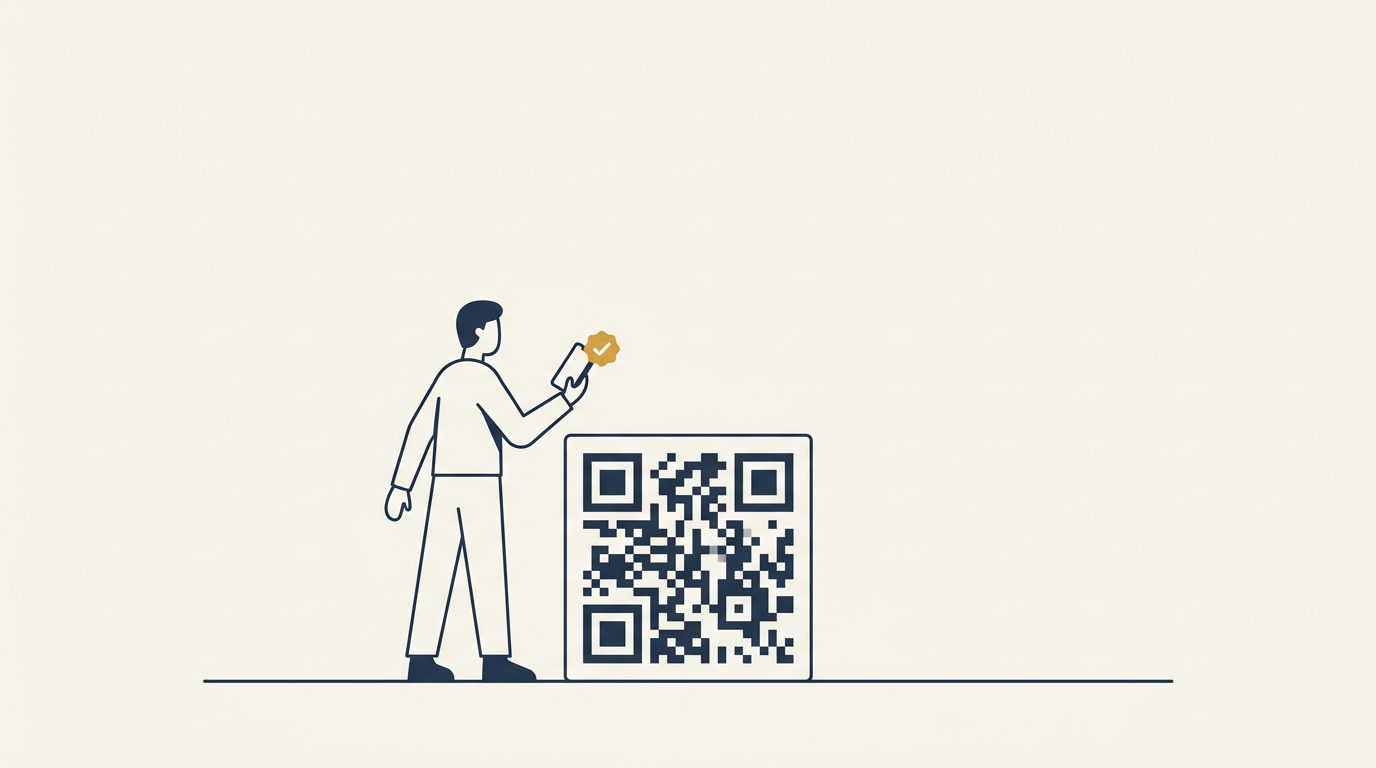
Diplino provides a public verification page for every single certificate. This page is reached by a unique link and a unique QR code. The recipient can add this link directly to their LinkedIn profile. They can also put the QR code on their resume. When an employer or auditor wants to verify the qualification, they simply click the link or scan the code with their smartphone.
They do not need to download an app. They do not need to create an account. They do not need to log in. The public verification page opens immediately in their web browser.
Behind the scenes, the Diplino server performs a rapid check. It looks up the unique verification code in the database. It also checks the Ed25519 cryptographic signature to ensure the data has not been altered. If the certificate is active and valid, the page displays a green confirmation message. It shows the recipient's name, the course details, and the issuing organization's branding.
If the issuing organization has revoked the certificate, the page displays a clear invalid status. The verifier instantly knows that the credential should no longer be trusted. This live database lookup makes revocation a practical reality rather than a theoretical concept. It removes the uncertainty from the hiring process. Employers can trust the information they see because they are communicating directly with the issuer's secure database.
What Happens When a Certificate is Revoked?
When an HR team or university administrator clicks the revoke button, the system updates the database immediately. This action changes the experience for both the recipient of the certificate and any third party trying to verify it. Understanding these changes helps organizations manage communication during the revocation process.
The Third-Party Verifier Experience
The primary audience for a verification page is the third-party verifier. This might be a hiring manager, an internal HR auditor, or a compliance officer. Their job is to confirm that an individual holds the required qualifications. Modern credential systems are designed to make this task as simple as possible.
The technical community agrees that protocol design should discourage verifier involvement in revocation where possible to keep the process efficient. This means the verifier should not have to perform complex manual checks. They should not have to cross-reference multiple databases or download revocation lists. The system should do the heavy lifting for them.
Diplino follows this practical approach. The verifier simply opens the public verification page. The server handles the database lookup and the signature check automatically. If the certificate is revoked, the page clearly states that the credential is no longer valid. The verifier gets an immediate, definitive answer without any extra work.
Industry guidelines also emphasize that verifiers should trust the issuer for the recognition domain only if the credential has not expired or been revoked during the evaluation process. The live verification page enforces this rule perfectly. By displaying the revoked status prominently, it prevents employers from trusting outdated or invalidated information.
The Recipient Experience
The recipient also experiences a change when their certificate is revoked. They can still click the unique link they received in their original email. However, the page will no longer show a valid certificate. It will show the revoked status.
Clear communication with the recipient is essential when revoking a certificate to prevent confusion and frustration.
If the recipient previously added the credential to their LinkedIn profile, the link on their profile will now point to this invalid page. If they printed a professional PDF output of the certificate with the QR code, scanning that code will also lead to the invalid page.
Because the recipient's public professional profile is affected, organizations must handle revocation carefully. If the revocation is due to a simple administrative typo, the organization should communicate with the recipient immediately. They should explain that the old link will stop working and provide the new, correct link as soon as possible. Good communication prevents confusion and maintains a positive relationship with the learner.
Reissuing Credentials Without Confusion
Revoking a certificate is often only the first step. In many cases, the organization needs to issue a replacement. This is especially true for administrative corrections and routine renewals. The process of reissuing must be clear and organized to avoid frustrating the recipient.
The first step is always to revoke the incorrect or expired certificate. This ensures that only one valid version of the truth exists. Having two active certificates for the same qualification can confuse employers and auditors. Once the old record is safely invalidated in the database, the administrative team can prepare the new credential.
Diplino makes this issuance process highly efficient. The organization can use the same brand-customizable templates and themes they used originally. They can generate the new certificate in multiple languages if required. If they are correcting a batch of errors, they can use the CSV batch generation tool to issue the replacements all at once.
Every newly issued certificate receives its own unique verification code. It gets a brand new public verification page and a new QR code. The cryptographic signature is generated specifically for this new set of data.
The organization must then send the new details to the recipient. The recipient will need to update their LinkedIn profile with the new link. They will also need to download the new professional PDF output if they wish to keep a local copy. Providing clear, simple instructions helps the recipient make these updates quickly. A smooth reissuing process reflects well on the professionalism of the training provider or university.

Data Privacy and EU Compliance During Revocation
Handling digital certificates means handling personal data. Names, email addresses, and educational histories are all protected under privacy laws. When an organization revokes or modifies a certificate, they must do so in compliance with these regulations. For European organizations, the General Data Protection Regulation (GDPR) sets strict rules on how personal data is stored and managed.
This is where the underlying technology of the credential system matters deeply. Diplino is EU-hosted and GDPR-friendly by design. EU data residency is a core strength of the platform, not a secondary add-on. All certificate records reside in a secure, centralized database located within the European Union.
Hosting credential data on secure EU servers ensures organizations retain total control over privacy and compliance requirements.
This database architecture gives issuing organizations full control over their data. If a student exercises their right to be forgotten under GDPR, the organization can easily locate and delete the relevant records from the database. The revocation process is straightforward and legally compliant.
Some experimental credential technologies rely on decentralized networks to store data. Once data is published to those networks, it can be extremely difficult or impossible to delete. This creates significant compliance risks for professional organizations. Diplino avoids these risks entirely. By using a secure database backed by Ed25519 cryptographic signatures, Diplino provides strong tamper-evident security without sacrificing data control. Organizations get the credibility of cryptographic verification while maintaining total compliance with EU privacy laws.
Building a Reliable Credential Strategy
Adopting a digital credential system requires more than just technical implementation. It requires a thoughtful operational strategy. Training providers, L&D teams, and consulting firms should establish clear internal policies for how they handle certificates.
First, organizations should define exactly who has the authority to revoke a certificate. This prevents accidental deletions by unauthorized staff members. The HR or administrative team should document the specific scenarios that justify revocation. Having clear guidelines ensures consistency across the organization.
Second, staff should receive proper training on the issuance tools. They need to understand how CSV batch generation works. They need to know how to check data for typos before clicking the issue button. Taking a few extra minutes to verify names and dates can prevent the need for revocation later.
Finally, organizations should educate their recipients. When a student completes a course, the provider should explain how the verification page works. They should provide simple instructions for sharing the credential on LinkedIn. They should also explain the renewal process if the certificate has an expiration date. When recipients understand the value of live verification, they are more likely to use and share their credentials correctly.
The Role of Cryptographic Signatures in Trust
To fully appreciate why a live database approach works so well, it helps to understand the security layer behind it. Diplino uses Ed25519 cryptographic signatures. This might sound highly technical, but its practical application is very straightforward for the issuing organization.
When an HR team or university generates a certificate, the Diplino server takes the core details of that certificate. This includes the recipient's name, the course title, the date, and the issuer's identity. The server then uses a complex mathematical algorithm to generate a unique digital signature for that specific combination of data. This signature is permanently attached to the certificate record in the database.
Cryptographic signatures provide absolute certainty that a certificate's details have never been secretly altered by the recipient.
If anyone tries to alter the data later, the signature will no longer match. For example, if a recipient somehow tried to change their course completion date from 2023 to 2024, the mathematical check would fail instantly. The public verification page would immediately flag the certificate as invalid.
This tamper-evident security is what gives employers confidence. They do not have to blindly trust a PDF document. They can rely on the mathematical certainty of the signature check. Because the Diplino server handles this check automatically every time the page loads, the verifier never has to worry about the technical details. They just see a clear, trustworthy result. This combination of high-level security and simple user experience is exactly what professional organizations need.
Practical Scenarios for Different Issuers
Different types of organizations use revocation in different ways. Understanding these specific use cases highlights the flexibility of a database-backed credential system.
For corporate Learning and Development (L&D) teams, speed and accuracy are the main priorities. An L&D manager might oversee compliance training for hundreds of employees. If an employee leaves the company, the HR team might need to revoke certain internal credentials. If a training module is updated to meet new legal standards, the team might need to expire the old certificates and issue new ones. The ability to manage these changes quickly through a central dashboard keeps the company compliant and reduces administrative friction.
For workshop and conference organizers, brand control is paramount. Organizers want attendees to share their certificates on LinkedIn to generate positive visibility for the event. The certificates must look highly professional. Diplino's brand-customizable layouts ensure a great visual impression. However, if an attendee requests a name change or notices a typo, the organizer must fix it immediately. A fast revocation and reissuing process ensures the attendee remains happy and continues to promote the event online.
For consulting firms running client-specific training programs, confidentiality and data privacy are critical. These firms often train executives on sensitive business strategies. The credentials they issue must be secure. Knowing that Diplino is EU-hosted and GDPR-friendly gives these consulting firms confidence. They can assure their clients that all personal data is handled legally and securely. If a client requests an update or a revocation, the consulting firm can execute it with full control over the database records.
Conclusion
Managing digital certificates involves much more than just clicking an issue button. Professional organizations need a reliable, secure way to handle the inevitable changes that occur after a credential is awarded. Mistakes need correcting, qualifications expire, and policies must be enforced.
A static PDF cannot meet these operational demands. Organizations require a system where credentials are live, database-backed records. By combining secure EU hosting, tamper-evident cryptographic signatures, and public verification pages, Diplino provides a highly professional solution. It allows training providers, universities, and HR teams to revoke and reissue certificates easily. This ensures that third-party verifiers always see accurate information, protecting the credibility of the issuer and the integrity of the professional job market.
Frequently asked questions
Continue reading

Digital Credential Verification: Beyond Blockchain for Trust and Security
Discover how leading organizations achieve robust, verifiable digital credentials using established cryptographic methods, ensuring authenticity and data privacy without relying on blockchain technology.

Secure Your Brand: The Power of Verifiable Digital Certificates
Standard PDF certificates are easily faked, undermining your brand. Discover how secure digital credentials protect your reputation and ensure trust in your graduates.

Replacing Manual Certificate Workflows After Large Events
Emailing static PDFs creates operational bottlenecks and leaves documents vulnerable to forgery. A structured import replaces hours of manual data entry with verifiable records.