Issuing Tamper-Proof Internship Certificates for Academic and Work Credits
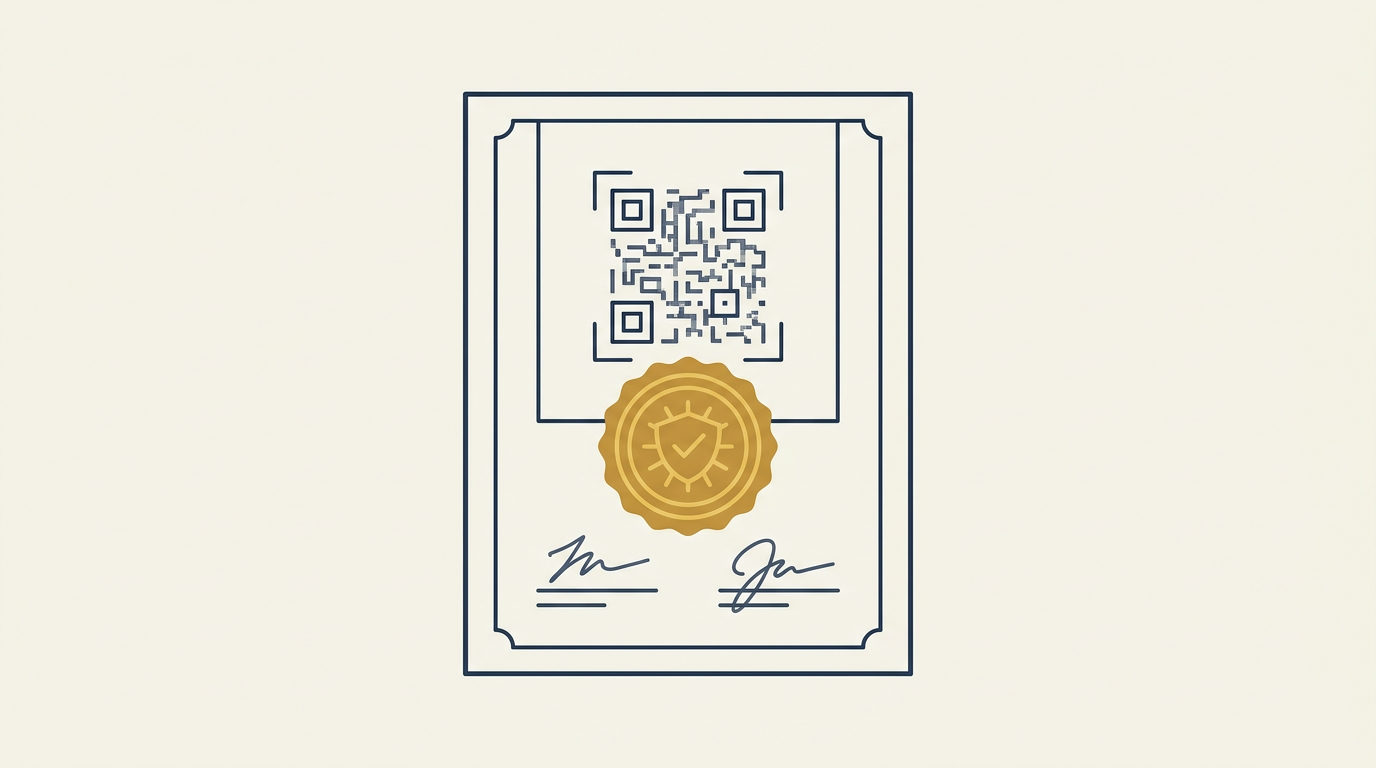
Internship programs require formal documentation to prove a student completed their required hours and duties.
HR teams and university coordinators spend hours drafting these documents at the end of every term. Students need reliable proof of their work for academic credit and future job applications. A modern approach replaces editable files with cryptographically secure records that anyone can verify instantly.
The Growing Administrative Burden of Internship Programs
Managing an internship program involves a significant amount of administrative work. HR teams often struggle with the end of the summer season. Dozens of students leave the company at the same time. Each student needs a formal document detailing their experience. Managers often delay writing their feedback. The administrative workload piles up quickly.
University coordinators face a similar problem on the receiving end. Students return to campus and submit their documentation. The coordinator must review every file to grant academic credit. They have to check the dates, the hours worked, and the tasks completed. If a document looks suspicious, the coordinator has to contact the company.
Manual document creation slows down HR teams and creates unnecessary delays for students needing academic credit.
This back-and-forth communication wastes valuable time. Companies want to provide a good experience for their interns. Universities want a smooth process for their staff. Students just want their credits approved so they can graduate. The traditional method of drafting individual text documents creates friction for everyone involved. A structured system for issuing and verifying these records solves this problem entirely.

Meeting Strict Academic and Legal Standards in Europe
Internship certificates are not just polite thank-you letters. They are formal records with specific requirements. Universities rely on these documents to confirm a student met the criteria for their degree program. If a certificate lacks key details, the university might reject it.
In Germany, the legal framework requires companies to issue a completion certificate at the end of an internship. This document must specify the type, duration, and objective of the training. It must also include clear information about the skills and knowledge the student acquired. These rules ensure the internship provided actual educational value.
When HR teams write these documents manually, they often forget these mandatory fields. A manager might write a glowing review of the student's personality but fail to list their actual duties. A structured credential platform prevents these mistakes. By using predefined templates, HR ensures every required field is filled out before the document is generated.
The template guides the user through the process. It prompts them for the start date and the end date. It asks for the total hours completed. It provides dedicated text boxes for the core duties and the acquired skills. This standardization guarantees that every student receives a document that meets academic requirements.
Why Standard Digital Files Fail the Trust Test
Many companies have moved away from printing physical certificates. They now email digital files to their interns. Usually, this means saving a text document as a PDF. While this saves paper, it creates a massive security vulnerability.
A standard PDF is just a digital container. It offers no real protection against tampering. Anyone with basic editing software can open a PDF and change the text. A student could easily change their internship duration from two months to six months. They could add skills they never learned. They could even change a mediocre performance review into an outstanding one.
A standard PDF offers no real security because anyone with basic software can alter the text after it is saved.
When a university coordinator receives a plain PDF, they have no way to know if it is genuine. They cannot tell if the file was altered after the company issued it. To verify it, they have to find the contact information for the HR department and send an email. Secure systems distinguish themselves from standard digital badges by using strong authentication methods to ensure tamper-proof records.
Basic digital files simply fail the trust test. They force universities and future employers to rely on manual background checks. This defeats the purpose of providing a certificate in the first place. A modern credential must carry its own proof of authenticity.
Practical Cryptography Without the Complications
To solve the security problem, certificates need a way to prove they have not been altered. This is where cryptography comes in. Diplino secures every certificate using a cryptographic signature called Ed25519.
When an HR team issues a certificate, Diplino creates a secure record in its own database. It takes the core details of the document and signs them mathematically. If someone tries to change the student's name or hours on the file, the signature breaks. The system will immediately flag the document as invalid.
Many experimental projects try to solve this problem using complex decentralized networks. An analysis of higher education credential systems from 2017 to 2026 revealed that while blockchain utilization is near-universal among experimental projects, other critical interoperability factors remain critically underexplored. Diplino avoids this distraction entirely.
Cryptographic signatures provide mathematical proof of authenticity without requiring complex or experimental infrastructure.
You do not need a blockchain to prove a document is authentic. You do not need crypto tokens or digital wallets. Diplino relies on a straightforward database-backed lookup combined with a strong cryptographic signature. This provides all the security an HR team needs without the technical overhead. It is a practical, professional approach that works quietly in the background. The buyer gets a reliable tool, and the student gets a credential they can trust.
Writing the Core Duties and Skills Section
The most important part of an internship certificate is the description of the work performed. Future employers read this section carefully. They want to know exactly what the student did during their time at the company.
HR teams should work with department managers to draft clear, concrete descriptions. Avoid vague statements like "helped the marketing team." Instead, use specific action verbs. State that the student "drafted weekly social media posts, conducted competitor research, and assisted with campaign reporting."
Quantify the work whenever possible. Mention the software tools the student used. If they worked in a laboratory, list the specific testing methods they learned. If they worked in finance, detail the types of reports they helped prepare.
A good certificate also separates the daily duties from the overall skills acquired. The duties section explains what the student did. The skills section explains what the student learned. For example, a duty might be "handling customer support calls." The acquired skill would be "conflict resolution and client communication." Structuring the text this way makes the document highly valuable for the student's future career.
Designing a Professional Visual Layout
While security is the most critical feature, appearance still matters. An internship certificate represents the company's brand. It should look professional, clean, and official.
Diplino allows organizations to customize the visual design of their credentials. HR teams can select professional templates and adjust the themes to match their corporate identity. They can upload high-resolution company logos. They can include digital images of authorized signatures from department heads or directors.
The platform generates a professional PDF output for every certificate. This gives the student a beautiful document they can print if they choose. The visual layout should balance aesthetics with readability. The student's name should be prominent. The dates and hours should be easy to find.
A well-designed certificate reflects well on the issuing company. It shows that the organization takes its internship program seriously. It demonstrates respect for the student's time and effort. By controlling the design through a centralized platform, companies ensure that every department issues documents that meet the same high visual standard.

How Independent Verification Actually Works
The true value of a modern credential is how easily someone else can verify it. Diplino makes this process entirely frictionless for the person checking the document.
Every certificate generated by the platform includes a unique verification link and a QR code. When a university coordinator receives the PDF, they do not need to call the company. They simply scan the QR code with their phone or click the link on their computer.
This action opens a public verification page hosted by Diplino. The page displays the original, unaltered details of the certificate directly from the secure database. The system performs a signature check automatically. It confirms that the data on the screen matches the cryptographic signature created at the time of issuance.
Public verification pages allow universities and employers to confirm a document instantly without creating an account.
The person verifying the document does not need to log in. They do not need to download an app. They do not need to understand cryptography. They just look at the screen and see the green checkmark confirming the document is valid. This setup is highly effective at enabling external parties to validate claims without directly contacting the issuing entity. It completely eliminates the administrative burden of manual background checks.
Scaling the Process with Batch Generation
Small companies might only have one or two interns a year. Issuing certificates one at a time works fine for them. Large corporations and consulting firms often hire hundreds of interns for summer programs. Creating these documents individually would take weeks.
Diplino provides a bulk issuance feature to handle large volumes. HR teams can generate hundreds of certificates at once using a simple CSV batch process.
The workflow is straightforward. The HR manager creates a spreadsheet. They create columns for the student's name, the start date, the end date, the total hours, and the specific department. They can even include a column for personalized manager feedback.
Uploading a spreadsheet allows coordinators to issue hundreds of personalized certificates in a few minutes.
The manager uploads this CSV file to the platform. Diplino maps the columns in the spreadsheet to the corresponding variables on the certificate template. With one click, the system generates all the individual records. It applies the cryptographic signature to each one. It creates the unique verification pages and the PDF files. What used to take an entire HR department weeks to finish now takes a few minutes.
Protecting Student Data with Local Hosting
Internship records contain sensitive personal information. A certificate includes the student's full name, their dates of employment, and often qualitative evaluations of their performance. Protecting this information is a legal requirement.
European institutions demand strict compliance with the General Data Protection Regulation. Organizations cannot simply upload student data to random servers located outside the jurisdiction. They need guarantees about data residency and privacy.
Diplino is EU-hosted and GDPR-friendly by design. This is a core strength of the platform, not an afterthought. All data remains within secure European servers. Modern systems protect information by using digital signatures to maintain tamper-evident records within highly controlled environments.
HR teams can confidently tell their legal departments that the platform meets strict privacy standards. University coordinators can trust that their students' information is handled properly. The system only exposes the data necessary for verification on the public page. The underlying database remains completely secure. This focus on privacy gives professional organizations the confidence they need to adopt digital credentials.
Helping Students Display Their Credentials Publicly
After completing a rigorous internship, students want to share their success. They update their resumes and apply for entry-level jobs. They also update their professional online profiles to attract recruiters.
Diplino makes it easy for recipients to share their verified credentials. The public verification page serves as a permanent digital home for their achievement. Students can share the unique link directly with potential employers in an email or a cover letter.
The platform also supports direct integration with professional networks. Recipients can add their certificate straight to their LinkedIn profile. They simply click a button on their verification page. The credential appears in the licenses and certifications section of their profile.
This integration includes a direct link back to the Diplino verification page. When a recruiter views the student's profile, they can click the link and instantly verify the internship details. This builds immediate trust. It proves to the recruiter that the student actually completed the work they claim. It gives the student a significant advantage in a competitive job market.
Conclusion
Managing internship documentation does not have to be a frustrating administrative chore. By moving away from easily altered text files, HR teams can provide students with credentials that actually hold weight.
University coordinators need reliable proof of a student's hours and acquired skills. Future employers need to trust the information on a resume. Diplino provides a practical, professional way to meet these needs. The platform combines clear visual design with strong cryptographic security.
The use of database-backed Ed25519 signatures ensures every document is authentic. The public verification pages allow anyone to check a certificate instantly without logging in. Features like CSV bulk issuance save HR teams countless hours of manual work. By adopting a secure, EU-hosted credential platform, organizations can streamline their operations and give their interns a professional advantage that lasts for years.
Frequently asked questions
Continue reading
Structuring a Secure and Verifiable Digital Certificate
Static PDF documents leave training credentials vulnerable to alteration. Adding unique identifiers and live verification links turns a simple award into a trusted digital asset.
Participation vs. Completion: Choosing the Right Certificate for Your Program
Many organizations struggle with credentialing. Learn the key differences between participation and completion certificates to enhance your program's credibility and accurately reflect attendee achievements.

Digital Badges Versus Certificates: A Guide for Training Providers
Uncover the key differences between digital badges and formal certificates to best validate learning outcomes and enhance your training programs.