Avoid Common Pitfalls When Issuing Digital Certificates
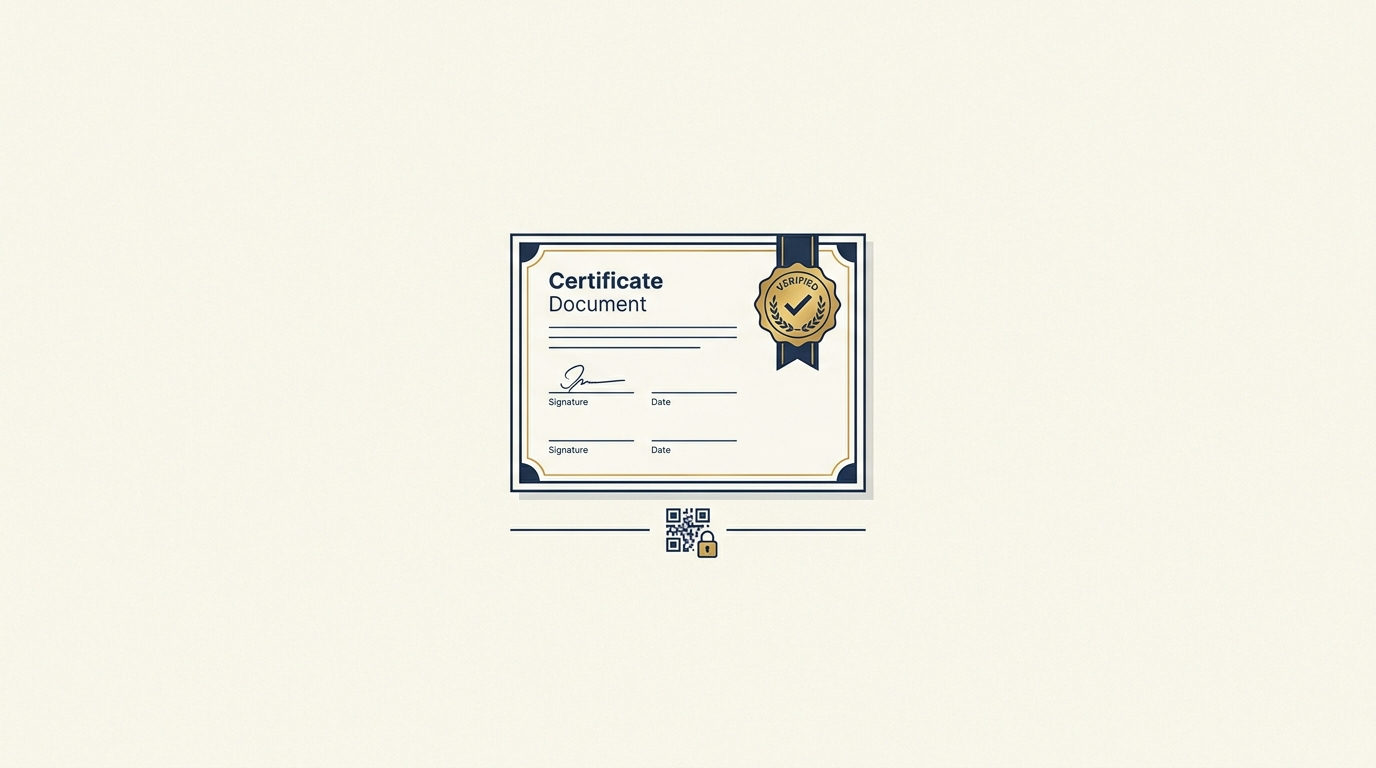
Issuing digital certificates seems simple until your team spends hours fixing typos, tracking lost PDFs, and answering verification requests from confused employers.
Many training providers rush into digital credentials without a clear plan for design or delivery. This creates administrative headaches and damages brand credibility. A structured approach to design, issuance, and verification prevents these costly mistakes.
Key Insights
- Preparation prevents data errors. Defining rules for names and emails before issuing certificates stops embarrassing mistakes and reduces manual corrections.
- Testing saves administrative time. Running a small batch test reveals delivery issues before they affect hundreds of learners at once.
- Verification must be public. Employers need instant access to check a credential without creating an account or logging in to a complex system.
- Privacy is a core requirement. Storing learner data on secure, EU-hosted servers protects organizations from compliance risks and builds trust.
- Signatures replace complex infrastructure. Cryptographic signatures offer reliable proof of authenticity without requiring experimental technology or cryptocurrency networks.
Why Digital Certificates Matter for Training Providers Now
Training companies often struggle with repetitive administrative tasks. Issuing hundreds of certificates manually takes hours. This manual work frequently leads to embarrassing typos. A misspelled name frustrates the learner, who then has to email the provider for a correction. This creates unnecessary friction for everyone involved. Universities, HR teams, and specialized consulting firms face the same exact problem. They run high-quality training programs, but their credential delivery process often feels outdated.
Learners want immediate proof of their hard work. They want to share their achievements with their professional network. Employers want to know that the proof is real. Paper certificates look nice on a wall, but they do nothing for a digital resume. Static PDF files are slightly better for email, but they present a massive security flaw. Anyone with basic image editing software can change a name or a date on a standard PDF. This forces employers to contact the training provider directly to verify the claim.
Answering these verification emails drains time from your administrative staff. It slows down the hiring process for the learner. It also makes your organization look like it relies on outdated technology. Modern organizations need a better way to handle this workflow. They need a system that issues beautiful documents while providing absolute proof of authenticity.
Diplino solves this specific business problem. It acts as a dedicated platform for creating, issuing, managing, and verifying digital diplomas. It removes the manual labor from the process. It gives training providers a professional tool that works immediately. You do not need to understand complex computer science to use it. You simply need a desire to improve your learner experience and protect your brand reputation.
Common Mistakes in Digital Certificate Design
Design is the first impression your credential makes. Many organizations treat the visual layout as an afterthought. They paste a low-resolution logo onto a generic background. They use too many different fonts. They overcrowd the page with unnecessary text. This makes the final document look cheap and unprofessional. A poorly designed certificate reflects poorly on the expensive training program it represents.
Another common mistake involves losing brand control. Some software platforms force their own logos onto your certificates. They make your credential look like an advertisement for their company. Your learners completed your program, not a software tutorial. The certificate must reflect your corporate identity perfectly.
Diplino provides fully customizable design tools to prevent these visual mistakes. You can build layouts that match your brand guidelines exactly. You can use professional templates and apply your own themes. The system generates a high-quality PDF output for every single credential. This means the learner gets a beautiful digital file that they can also print and frame. The printed version looks just as sharp as the digital version.
A professional certificate design builds immediate trust and ensures the focus remains entirely on your organization and your learner's achievement.
Multinational organizations face an additional design challenge. A consulting firm might deliver the same workshop in Spain, Germany, and France. Issuing English-only certificates to all these participants creates a poor local experience. Diplino supports multiple languages natively. You can issue the exact same branded template in the local language of the learner. This attention to detail elevates the perceived value of your training program. It shows your clients that you operate at a highly professional level.

The Pitfalls of Digital Certificate Issuance
The actual process of sending out certificates introduces another layer of risk. Manual data entry is the enemy of accuracy. Typing names and email addresses one by one guarantees that mistakes will happen. A tired administrator will eventually misspell a surname or transpose two letters in an email address. The credential will bounce back, or worse, it will reach the wrong person.
To avoid this, industry guidelines recommend defining clear issuance rules. Organizations should ensure recipient names and emails match official records perfectly before creating any documents. They also advise running a controlled test. This test validates the sharing process and helps catch exceptions before a full rollout. Sending a small test batch of five certificates reveals formatting errors quickly. You can fix these errors before you issue five hundred certificates to an entire graduating class.
Experts note that the technical issuance process relies on assembling claims and signing credentials with a private key before delivering them to the holder. Diplino handles this complex background work for you. You do not need to manage private keys manually. You do not need to understand the underlying code. The platform manages the technical assembly while you focus on your data.
Diplino offers two simple ways to issue credentials. You can issue them one at a time for individual learners. This works well for small, specialized workshops. For larger programs, you can use the bulk CSV batch generation feature. You export a spreadsheet from your student management system. You upload that spreadsheet into Diplino. The platform automatically generates and sends hundreds of personalized certificates in minutes. This turns a three-day administrative nightmare into a five-minute task.
Uploading a clean spreadsheet for bulk generation eliminates typing errors and saves your administrative team countless hours of tedious work.
You do not need to adopt complicated experimental frameworks to achieve this efficiency. Diplino does not use the W3C Verifiable Credentials Data Model. It does not use the Open Badges standard. These frameworks are often presented as necessary for modern credentials. They are not. Many practical, professional organizations find those standards overly complex and difficult to implement. Diplino provides a straightforward, ready-to-use solution that avoids the friction of experimental infrastructure.

How Cryptographic Verification Actually Works
Verification is the most important feature of any digital credential. If an employer cannot trust the certificate, the certificate has no value. We have already established that standard PDFs are easily altered. To solve this, the industry relies on cryptographic verification. Unfortunately, this topic is often buried in confusing technical jargon. Many software vendors try to sell expensive blockchain systems to solve this problem.
Diplino takes a much more practical and reliable approach. It does not use blockchain technology. It does not use crypto tokens or cryptocurrency. Blockchain is entirely unnecessary for proving that a certificate is authentic. Instead, Diplino uses a database-backed lookup combined with a tamper-evident cryptographic signature. This method is incredibly secure, fast, and environmentally friendly.
Here is how it actually works. When you issue a certificate, Diplino creates a unique record in its secure database. It assigns a unique verification code to that specific document. Then, it takes the core details of the certificate, like the name and the date. It signs these details with a specific cryptographic algorithm called Ed25519. You can think of this signature as a highly advanced, invisible digital wax seal.
If someone opens the PDF and tries to change their grade from a B to an A, they break the digital seal. The cryptographic signature immediately detects the alteration. When an employer tries to verify that altered document, the system will flag it as invalid. Any change to the certificate, no matter how small, is instantly detectable.
A tamper-evident cryptographic signature provides absolute certainty that a document remains exactly as it was when your organization first issued it.
This process happens entirely on Diplino's secure servers. The employer does not need to download special software to check the signature. They do not need to understand what Ed25519 means. They simply rely on the platform to perform the mathematical check in the background. This gives your organization enterprise-grade security without any of the associated technical headaches. It protects your reputation by ensuring that nobody can falsely claim to have completed your programs.
Avoiding Delivery and Record-Keeping Friction
Creating a secure certificate is only half the battle. Delivering it effectively is just as important. Many platforms force learners and employers to jump through hoops to access the document. They require users to create accounts, remember passwords, and navigate confusing dashboards. This friction ruins the experience. An employer reviewing fifty resumes will not create a new account just to verify one applicant's training course. They will simply ignore the certificate.
Diplino removes this friction entirely. Every single certificate has its own public verification page. This page is hosted by Diplino on a secure server. Each page has a unique link. When a learner receives their digital diploma, they receive this link. They can put this link directly on their digital resume.
The physical PDF also includes a unique QR code. This bridges the gap between printed and digital media. If a learner prints their certificate and hands it to an employer during an interview, the employer can act immediately. They just point their smartphone camera at the QR code. The phone instantly opens the public verification page.
Public verification pages allow anyone to confirm a credential instantly with a simple click or a quick smartphone scan.
The most crucial aspect of this public page is that anyone can open it. The employer can confirm the certificate instantly. They do not have to log in. They do not have to register. They just see a clean, professional page that displays the valid credential and your organization's branding. Verification becomes a frictionless, ten-second process.
Learners also want to share their success publicly. LinkedIn is the primary venue for professional networking. Diplino makes this sharing process incredibly simple. Recipients can add their credentials directly to their LinkedIn profile with a few clicks. The unique verification link travels with the post. When a recruiter sees the post on LinkedIn, they can click the link and land on the public verification page. This provides instant proof for the learner. It also provides excellent brand visibility for your training company.
Privacy, Compliance, and EU Data Hosting
Handling learner data requires serious attention to privacy laws. Educational records, names, and email addresses are sensitive information. Training providers cannot afford to be careless with this data. Regulatory bodies impose heavy fines on organizations that fail to protect personal information. Human resources departments and university administration teams are especially sensitive to these compliance requirements.
Many software platforms host their data on servers scattered across the globe. This creates a massive compliance headache for European organizations. If a German university issues a certificate, they need to know exactly where that student's data lives. Sending that data to servers outside of Europe often violates strict privacy policies.
Diplino addresses this concern directly through its infrastructure choices. The platform is EU-hosted. It is GDPR-friendly by design. European data residency is not an expensive add-on or an afterthought. It is a core strength of the platform. Your learner data stays within the European Union, protected by some of the strongest privacy laws in the world.
Keeping sensitive learner data on secure European servers ensures your organization remains fully compliant with strict regional privacy regulations.
This commitment to privacy gives your legal and compliance teams peace of mind. When you pitch your training services to a large corporate client, they will ask about data security. They will want to know how you handle their employees' information. Using an EU-hosted platform like Diplino allows you to answer those questions confidently. You can assure your clients that their data is handled with the utmost professional care. This level of operational maturity helps you win larger contracts and build stronger client relationships.

The Role of Clear Issuance Rules and Testing
Adopting a new digital system requires a brief adjustment period. You cannot simply upload a messy spreadsheet and expect perfect results. Data hygiene is a critical part of professional certificate management. Before you issue your first batch of credentials, you must audit your internal records.
Look at the names in your student management system. Are they capitalized correctly? Are the email addresses current? A digital system will process exactly what you give it. If you feed it bad data, it will generate bad certificates. Establishing clear internal rules for data entry prevents these issues. Train your staff to verify names and emails at the beginning of a course, rather than waiting until the end.
Once your data is clean, you must embrace the testing phase. Never run a batch generation of five hundred certificates on your very first try. Create a test spreadsheet with three rows. Use your own email address and the email addresses of two colleagues. Run the CSV batch process.
Check the results carefully. Did the emails arrive promptly? Does the PDF look correct? Is the logo positioned properly? Scan the QR code with your phone. Does the public verification page load instantly? Does the layout look good on a mobile screen?
This controlled test takes less than ten minutes. It validates your entire workflow. If you spot a formatting error, you can fix the template immediately. Catching a mistake during a small test is a minor adjustment. Catching a mistake after emailing hundreds of paying clients is a major customer service crisis. Professional organizations test their systems thoroughly before going live. Diplino makes this testing process fast and forgiving.
Conclusion
Managing digital certificates does not have to be a frustrating administrative burden. The days of printing documents, signing them by hand, and mailing them out are over. The era of issuing easily forged, static PDFs is also coming to an end. Modern organizations require a more secure, professional approach.
By focusing on clean data, professional design, and reliable technology, you can transform how you deliver credentials. Diplino provides the exact tools you need to make this transition smoothly. The platform handles the complex cryptographic signatures and the secure data hosting in the background. This allows your team to focus on what they do best, which is delivering exceptional training and education.
Start by auditing your current issuance process. Identify how much time your team spends fixing errors and answering verification requests. Then, design a clean, branded template that reflects your organization's professional standards. Run a small test batch to verify your workflow. Finally, educate your learners on how to share their new, verifiable credentials on their professional networks. Taking these practical steps ensures your certificates carry the trust and authority your brand deserves.
Frequently asked questions
Continue reading

Instant Credential Verification: How Digital Certificates Ensure Authenticity
Digital certificates offer immediate, secure verification through unique links and QR codes. This ensures authenticity without needing specialized software or accounts.
Authenticating Workplace Safety Training Certificates for Compliance
Discover how robust systems for issuing and managing safety training certificates ensure compliance, facilitate verification, and uphold workplace safety standards.

Building Employer Trust: The Core Elements of Verifiable Digital Credentials
Discover how clear issuer identity, proof of achievement, and stable identifiers are the true pillars of employer confidence in digital certificates, far beyond mere aesthetics.