Securing Language Attendance Records for Visa and Academic Compliance
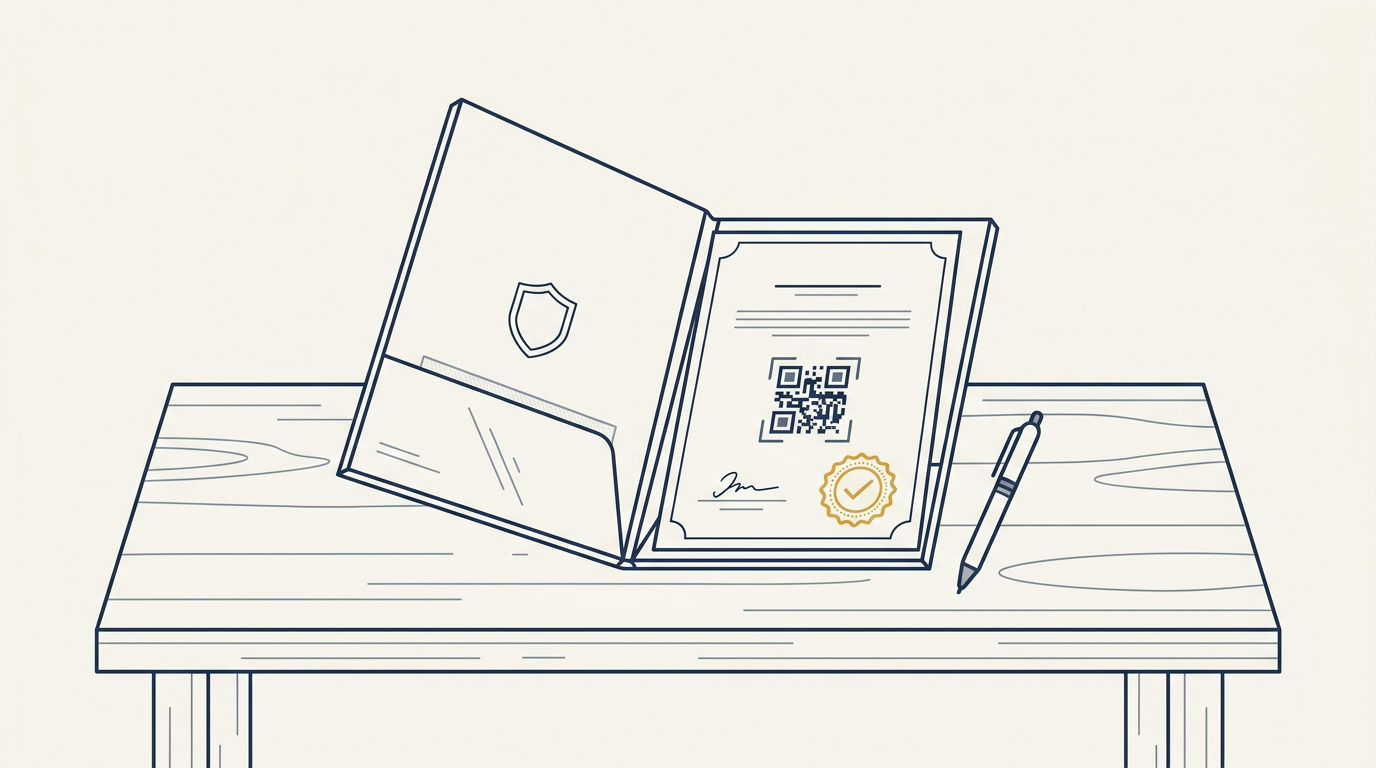
Language academies face increasing pressure to provide verifiable proof of student proficiency for visa applications and university admissions.
Embassies and employers no longer accept simple paper documents without a reliable way to check their authenticity. Schools must issue certificates that clearly state course hours and proficiency levels while offering instant verification. Modern cryptographic tools make this process fast and secure.
Why Language Academies Face Strict Proof Requirements
Language schools operate in a high-stakes environment. Students invest significant time and money into their education. They do this to achieve specific life goals. Many students need to prove their language skills to move to a new country. They apply for work visas. They apply for university admissions. They seek employment in international companies. All of these paths require formal documentation.
Receiving organizations review these documents carefully. Embassy officials process thousands of visa applications every month. University admissions officers evaluate credentials from all over the world. They cannot simply trust a piece of paper. Paper is easy to forge. Digital PDF files are even easier to alter. A student might change a failing grade to a passing grade. They might change an A2 proficiency level to a B2 level. This kind of fraud creates massive problems for immigration authorities and employers.
Because fraud is common, authorities have strict rules. They require specific details on every accepted document. For example, the European Commission's Blue Book traineeship programme accepts "Language certificates with a clear Common European Framework of Reference for Language (CEFR) level" as proof of language skills, and counts a certificate of attendance one CEFR level below the level it states. If a certificate lacks this clear CEFR rating, the application is rejected. The student loses their opportunity. The school loses its reputation.
Providing exact proficiency levels and verifiable course hours is essential for students navigating strict immigration and university admission processes.
Schools must also prove that the document is genuine. In the past, an embassy official would call the school. They would send an email to the administration office. They would ask the staff to confirm the student's attendance. This manual process is incredibly slow. It creates administrative bottlenecks. School staff spend hours answering verification emails. The student waits weeks for their visa approval.
Modern language academies need a better system. They need to issue documents that contain all required information. These documents must be instantly verifiable. They must look professional. They must carry the authority of the issuing school. Administrators need tools that make this process simple and reliable. They need a system built for professional organizations.
The Shift Toward Cryptographic Verification in Education
The education sector is modernizing its approach to credential security. Schools are moving away from easily manipulated paper records. They are adopting digital systems that provide absolute certainty. This transition involves using advanced technology to secure data. However, the best solutions keep the complexity hidden from the user.
Some experimental credential systems rely on complex blockchain networks. These networks require specialized knowledge. They often involve volatile cryptocurrency tokens. Professional organizations do not need this kind of experimental infrastructure. They need practical tools. They need systems that work immediately. A secure database combined with strong cryptography provides the perfect solution. This approach is highly reliable. It requires no specialized technical skills from the school or the student.
The core concept is simple. The system creates a unique digital record for every certificate. This record lives in a secure database. The system then applies a cryptographic signature to the data. Diplino uses Ed25519 signatures for this purpose. This is a highly secure standard. It acts like a digital wax seal. It locks the information in place.
Using secure databases with strong cryptographic signatures provides absolute certainty without the unnecessary complexity of experimental blockchain networks.
This technology is changing how organizations handle trust. Instead of relying on manual phone calls, evaluators rely on mathematics. Research shows that integrating secure digital systems is shifting verification from institutional trust to code-based, tamper-evident trust. The school still issues the credential. The school still holds the authority. But the verification process happens automatically through secure code.
For a language academy, this means peace of mind. The school issues a certificate. The system signs it cryptographically. The student downloads the document. If the student submits the document to an embassy, the embassy can check the signature. They do not need to call the school. They do not need to wait for an email reply. The cryptographic signature proves that the school issued the document. It proves that the document remains exactly as it was issued. This method is fast. It is secure. It is highly professional.
Documenting CEFR Levels and Course Hours Accurately
A certificate is only useful if it contains the right information. Evaluators look for specific data points. A beautiful design is not enough. The content must meet international standards. Language schools must ensure every document includes precise details. Missing information leads to rejected applications.
The Common European Framework of Reference for Languages is the global standard. It divides proficiency into six levels. These are A1, A2, B1, B2, C1, and C2. Every language certificate must display one of these levels clearly. It should also specify the language studied. It should include the student's full legal name. It should include their date of birth. These personal details help authorities match the certificate to a passport.
Course hours are equally important. Many visa categories require a minimum number of study hours. For example, a student visa might require 20 hours of study per week. The certificate must state the total hours completed. It should list the start date and the end date of the course. It should detail the attendance rate. If a student only attended half the classes, the certificate should reflect that fact.
Clear documentation of specific course hours and exact CEFR levels prevents unnecessary delays and rejections during formal application reviews.
Creating these detailed documents manually is difficult. Administrators type the information into word processors. They make typographical errors. They misspell names. They calculate dates incorrectly. These small errors cause major problems for students. A misspelled name on a certificate can halt a visa application entirely.
Professional credential platforms solve this problem through structured data. Administrators use predefined fields. They enter the specific CEFR level from a drop-down menu. They input the exact course hours. The system places this data perfectly onto the certificate template. The final output is a professional PDF document. It contains all the necessary information. It is formatted correctly. It is ready for official submission. This structured approach protects the school from administrative errors.

How QR Verification Stops Credential Fraud Instantly
Fraud prevention is a major concern for educational institutions. When people forge certificates, they damage the school's reputation. Employers and embassies lose trust in the institution. Schools must protect their brand. They must make their documents impossible to fake. Traditional watermarks and special paper are no longer sufficient. High-quality printers can replicate almost any physical security feature.
The most effective solution is digital verification. Every modern certificate should include a unique verification link. It should also include a scannable QR code. This code bridges the gap between the physical document and the digital record. When a student prints their certificate, the QR code remains visible. An embassy official can hold the paper document. They can take out their smartphone. They can scan the code immediately.
This simple action changes the entire verification process. Studies indicate that placing a verification QR code directly on physical certificates allows employers and evaluators to scan the document and verify its authenticity in real time. The scan takes the evaluator to a public verification page. This page is hosted on the school's secure credential platform.
Scannable codes bridge the gap between physical paper and digital records to give evaluators immediate confidence in the document.
The public verification page displays the original certificate data. It shows the student's name. It shows the CEFR level. It shows the course hours. The evaluator looks at the screen. They look at the paper document. They compare the two. If the information matches exactly, the document is genuine. The evaluator knows the paper has not been altered.
This process requires no login. The embassy official does not need to create an account. They do not need to download a special app. They simply use their standard camera application. The verification page is accessible to anyone with the unique link. This removes all friction from the verification process. It makes it incredibly easy for third parties to trust the school's documents. It completely eliminates the risk of accepting a forged paper certificate.
Replacing Manual Checks With Tamper-Evident Signatures
Visual verification is important. However, the system must also protect the underlying digital data. Students often submit PDF files directly to online application portals. Evaluators need a way to verify these digital files without scanning a physical code. This is where tamper-evident cryptographic signatures become essential.
A digital file is easy to edit. Anyone with basic software can change the text in a standard PDF. They can change a failing score to a perfect score. To prevent this, the credential platform applies a cryptographic hash to the data. This hash is a unique string of characters. It represents the exact state of the document at the moment of issuance.
If someone alters the document, the data changes. Even a single changed letter alters the entire hash. Evaluators use this mechanism to detect fraud. Modern systems are allowing third parties like employers to programmatically verify credential integrity against a cryptographic data hash to track whether a document has been altered. This provides mathematical proof of authenticity.
Cryptographic hashes act as digital seals that break instantly if anyone attempts to alter the grades or personal details on a certificate.
Diplino handles this complex process automatically in the background. The platform uses Ed25519 signatures to secure the core details of every certificate. When an evaluator opens the public verification page, the system performs a database lookup. It also performs a signature check on the server. It verifies that the signature matches the original data.
If the data is pristine, the verification page shows a green success message. It confirms that the certificate is valid and unaltered. If someone has tampered with the file, the verification fails. The system alerts the evaluator immediately. The evaluator knows the document is fake. This entire process takes milliseconds. It provides absolute security without requiring the evaluator to understand cryptography. It is a practical, powerful tool for maintaining credential integrity.

Protecting Student Privacy With GDPR-Friendly Infrastructure
Handling student data requires strict attention to privacy laws. Language schools collect sensitive information. They process legal names. They process birth dates. They process national identification numbers. They must protect this data carefully. In Europe, the General Data Protection Regulation sets strict rules for data handling. Schools face heavy fines if they violate these rules.
Privacy is a core requirement, not an optional feature. Schools cannot use credential systems that expose student data to the public internet unnecessarily. They cannot use systems that store data in unknown locations. They need clear data residency. They need to know exactly where their information lives.
Diplino addresses this need directly. The platform is hosted entirely within the European Union. This EU-native hosting ensures compliance with strict data protection standards. It is GDPR-friendly by design. Schools can use the platform with confidence. They know their student data remains secure and legally compliant.
Choosing an EU-hosted platform ensures strict compliance with privacy laws while protecting sensitive student information from unauthorized access.
The verification process also respects student privacy. The public verification page is only accessible via its unique link. It is not searchable on public search engines. Only the person holding the link or the QR code can view the certificate. The student controls their data. They decide who gets to see their credentials. They can share the link with an employer. They can share it with an embassy. They can keep it entirely private if they choose.
This balance is crucial for professional organizations. Schools need to provide verifiable proof to authorities. At the same time, they must protect their students from data breaches. A secure, EU-hosted database provides the perfect middle ground. It offers robust verification capabilities while maintaining strict privacy controls. It is the responsible way to manage digital credentials in a modern regulatory environment.
Issuing Authentic Language Credentials at Scale
Language academies handle large volumes of students. A typical school might have hundreds of students finishing courses at the same time. Issuing certificates for all these students manually is a massive administrative burden. Staff members spend days typing names and grades into templates. This manual work is expensive and prone to errors.
Professional credential platforms automate this entire workflow. They allow schools to issue certificates at scale. Administrators do not need to create documents one by one. Instead, they use bulk generation features. They compile all student data into a simple spreadsheet. This CSV file contains names, course hours, and CEFR levels.
The administrator uploads the CSV file to the platform. The system processes the data instantly. It generates hundreds of unique certificates in minutes. Each certificate receives its own cryptographic signature. Each certificate receives its own unique verification link and QR code. The system handles all the complex technical work in the background.
Bulk generation tools allow administrators to create hundreds of secure, verified documents in minutes instead of spending days on manual data entry.
Design customization is also handled automatically. Schools want their certificates to look professional. They want to maintain brand control. The platform allows schools to create beautiful, fully branded templates. They can upload their logos. They can choose their brand colors. They can adjust the layout. They can issue certificates in multiple languages.
When the administrator runs a batch generation, the system applies the data to the custom template. The output is a batch of high-quality, professional PDF documents. The school can download these files. They can email them to the students automatically. This automated process saves countless hours of administrative work. It ensures every student receives a perfect, secure document exactly on time.

Building Employer Trust With Public Validation Pages
Students attend language schools to improve their career prospects. They want to show employers that they have valuable skills. Employers want to hire competent staff. However, employers are often skeptical of self-reported language skills. Many applicants exaggerate their abilities on their resumes. Employers need a fast way to verify these claims.
Digital certificates solve this problem perfectly. They provide independent, verifiable proof of a candidate's skills. The public validation page is the key to this process. It gives the employer direct access to the source of truth. Research confirms that this approach allows external parties to publicly validate credential authenticity and prevents falsification by internal and external actors. The employer does not need to guess. They do not need to conduct a language test. They simply click a link.
Students can share these credentials easily. They can paste the unique verification link directly into their digital resumes. They can include the QR code on printed cover letters. Most importantly, they can add the credential directly to their LinkedIn profiles.
Enabling students to add verified credentials directly to their professional profiles gives employers immediate confidence in their language abilities.
When a student adds a Diplino certificate to LinkedIn, it appears in the licenses and certifications section. The entry includes a direct link to the public verification page. A recruiter browsing the profile can click the link. They instantly see the official document. They see the exact CEFR level. They see the cryptographic proof of authenticity.
This level of transparency builds enormous trust. It makes the student a more attractive candidate. It also elevates the reputation of the language school. Employers begin to recognize the school's certificates as reliable and trustworthy. They know that a document from this academy represents real, verified skills. This positive cycle benefits the student, the employer, and the educational institution.
Practical Steps for Language Schools Upgrading Their Systems
Transitioning to a modern credential system is a straightforward process. Language academies do not need to halt their operations to make the switch. They can implement the new system smoothly by following a few practical steps. The goal is to replace manual workflows with secure, automated processes.
First, the school should audit its current data collection methods. Administrators need to ensure they capture all required information accurately. They should standardize how they record student names, dates of birth, and course hours. Clean data is essential for smooth bulk issuance. A well-organized spreadsheet makes the entire process effortless.
Second, the school should design its professional templates. The design should reflect the institution's brand identity. It should include clear spaces for the student's name, the CEFR level, and the course details. The template must also leave room for the verification QR code. A clean, professional design communicates authority and credibility to anyone reviewing the document.
Standardizing data collection and designing professional templates are the first critical steps toward implementing a secure, automated credential system.
Third, administrators should familiarize themselves with the batch generation process. They should practice uploading a small CSV file to see how the system maps the data to the template. They can generate a few test certificates to verify the output. They can scan the test QR codes to experience the public verification page from an evaluator's perspective.
Finally, the school can roll out the new system to the students. Administrators should explain how the new digital certificates work. They should show students how to share their unique links on LinkedIn. They should explain how embassies and employers will use the QR codes to verify their skills. Clear communication ensures that students understand the value of their new, secure credentials.
Conclusion
Language academies play a crucial role in helping students achieve their international goals. To support these students effectively, schools must provide documentation that authorities and employers can trust entirely. Manual verification processes and easily altered paper documents no longer meet the standards of modern administrative bodies.
Adopting a secure digital credential platform solves these challenges immediately. By utilizing tamper-evident cryptographic signatures and public verification pages, schools can guarantee the authenticity of every document they issue. EU-hosted infrastructure ensures strict privacy compliance. Bulk generation tools eliminate administrative bottlenecks and reduce errors.
The result is a highly professional, reliable system that benefits everyone involved. Students receive easily shareable proof of their hard work. Embassies and employers gain instant confidence in the applicant's abilities. Language schools protect their reputation while significantly reducing their administrative workload. Moving to a verifiable digital credential system is a practical, necessary step for any serious educational institution today.
Frequently asked questions
Continue reading
Issuing Tamper-Proof Internship Certificates for Academic and Work Credits
Standard PDF certificates invite tampering and manual checks. Digital signatures and direct verification links simplify academic credit approvals for employers and coordinators.
Structuring a Secure and Verifiable Digital Certificate
Static PDF documents leave training credentials vulnerable to alteration. Adding unique identifiers and live verification links turns a simple award into a trusted digital asset.

Participation vs. Completion: Choosing the Right Certificate for Your Program
Many organizations struggle with credentialing. Learn the key differences between participation and completion certificates to enhance your program's credibility and accurately reflect attendee achievements.