A Hyperstack alternative with EU hosting and a DPA on every plan
Hyperstack is a certificate and badge platform priced per recipient per year, with Open Badges, a wallet and blockchain records on Premium. Diplino is a simpler tool for training teams that want EU hosting, a DPA and their own logo on every plan.
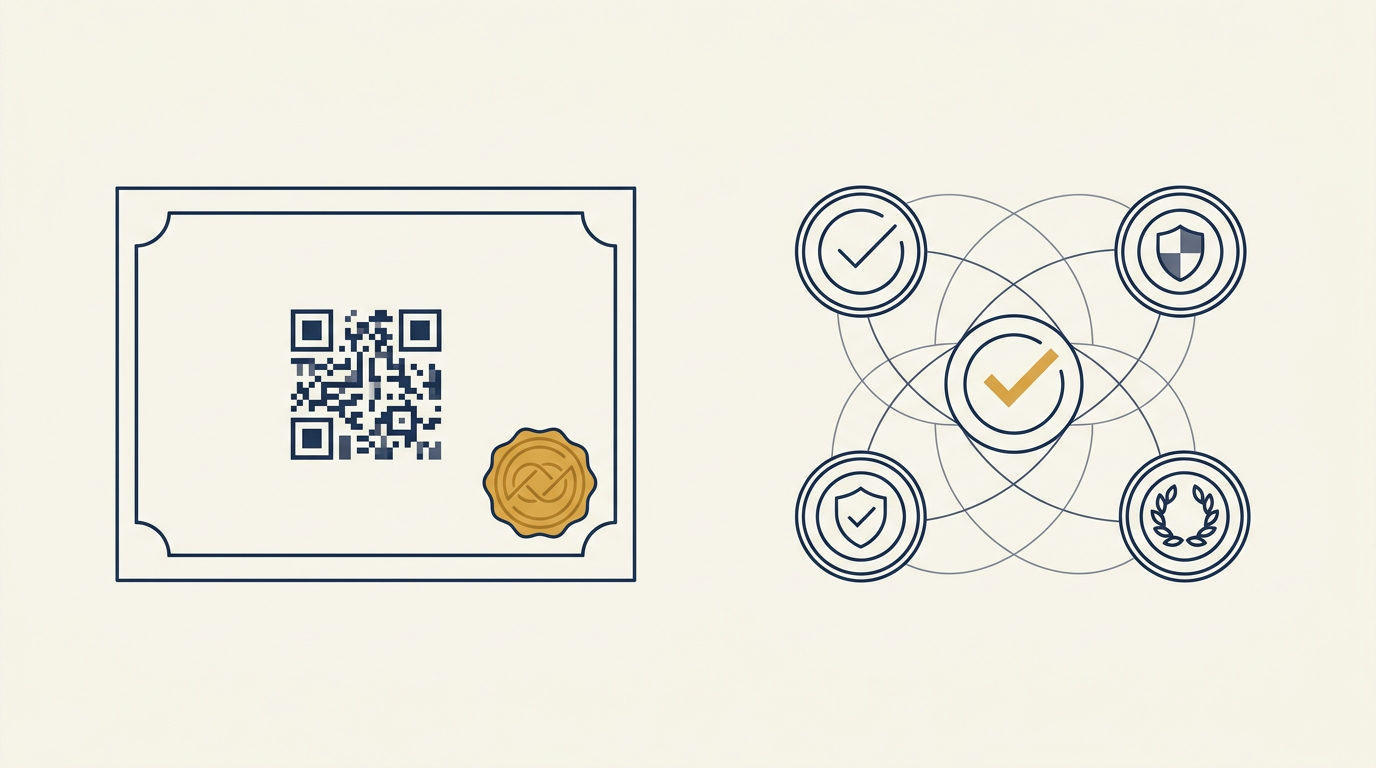
Hyperstack is a digital credential platform for certificates and badges, founded in 2018. It supports Open Badge 2.0, gives recipients a digital wallet, records credentials on the Hedera blockchain on its Premium plan and connects to tools such as Moodle, Canvas and Zapier. Pricing is per unique recipient per year: free for up to 20 recipients, then from 11.03 USD a month for up to 250 recipients a year. Diplino is for training teams that want a simple tool with data in the EU: your own logo, bulk sending from a spreadsheet, a PDF with a QR code and its own verification page for every certificate, and a DPA on every plan.
How Diplino and Hyperstack compare
| Diplino | Hyperstack | |
|---|---|---|
| Entry price | 12 EUR/month billed annually, 360 certificates a year from day one | Standard from 11.03 USD/month on monthly billing, or 112.51 USD/year, for up to 250 recipients a year |
| Free plan | 10 real certificates plus unlimited samples | Up to 20 recipients a year |
| Pricing unit | Certificates | Unique recipients per year, unlimited credentials per recipient; unused allowance does not roll over |
| Commitment | Monthly billing can be cancelled every month | Monthly or annual billing, cancel any time, 14-day money-back guarantee |
| Your own branding | Own logo on every plan; no vendor branding from Pro, 29 EUR/month billed annually | Branded theme, logo, verification page and email templates from Premium, 24.51 USD/month or 250 USD/year for 250 recipients |
| Data hosting | EU (Stockholm), DPA on every plan | Location not stated; custom terms and DPA listed on Enterprise |
| Users | 1 on Basic, 3 on Pro, unlimited on Business | 3 on Standard, 7 on Premium |
| Verification | Own verification page and a PDF with QR code | Verification page and QR code on every plan; blockchain records on Hedera from Premium |
| Open Badges, wallet | No | Open Badge 2.0 and a recipient wallet on every plan |
| API, Zapier, LMS | Not yet | API on every plan; Zapier and built-in integrations from Premium |
Prices and features as published on each provider's own website, checked 14 November 2026. Diplino's prices exclude VAT.
Choose Diplino if
You issue certificates of completion for courses and want your data in the EU, a DPA and your own logo on every plan, with paid plans from 12 EUR a month. You pay per certificate rather than per recipient, resends never use up a certificate, a corrected certificate counts as a new one, and sample certificates are unlimited, so you can check names and design before anything is sent. Every plan includes a PDF with a QR code. Diplino also reminds participants who have not opened their certificate, shows you which emails bounced, and issues bilingual certificates, including Arabic, on every plan.
Choose Hyperstack if
You need badges as well as certificates, Open Badge 2.0, a recipient wallet, blockchain records, an API or integrations with Moodle, Canvas or Zapier. Hyperstack covers those today, and Diplino does not. It also suits programmes where each person receives several credentials a year, since you pay once per recipient, and very small groups, since up to 20 recipients a year are free. For a wider view, see the overview of certificate tools.